

If you want the most flavorful juicy chicken ever, marinating is the way to go.
I’ve got six easy recipes that come together in minutes and can turn your weeknight meals from just okay to seriously good.
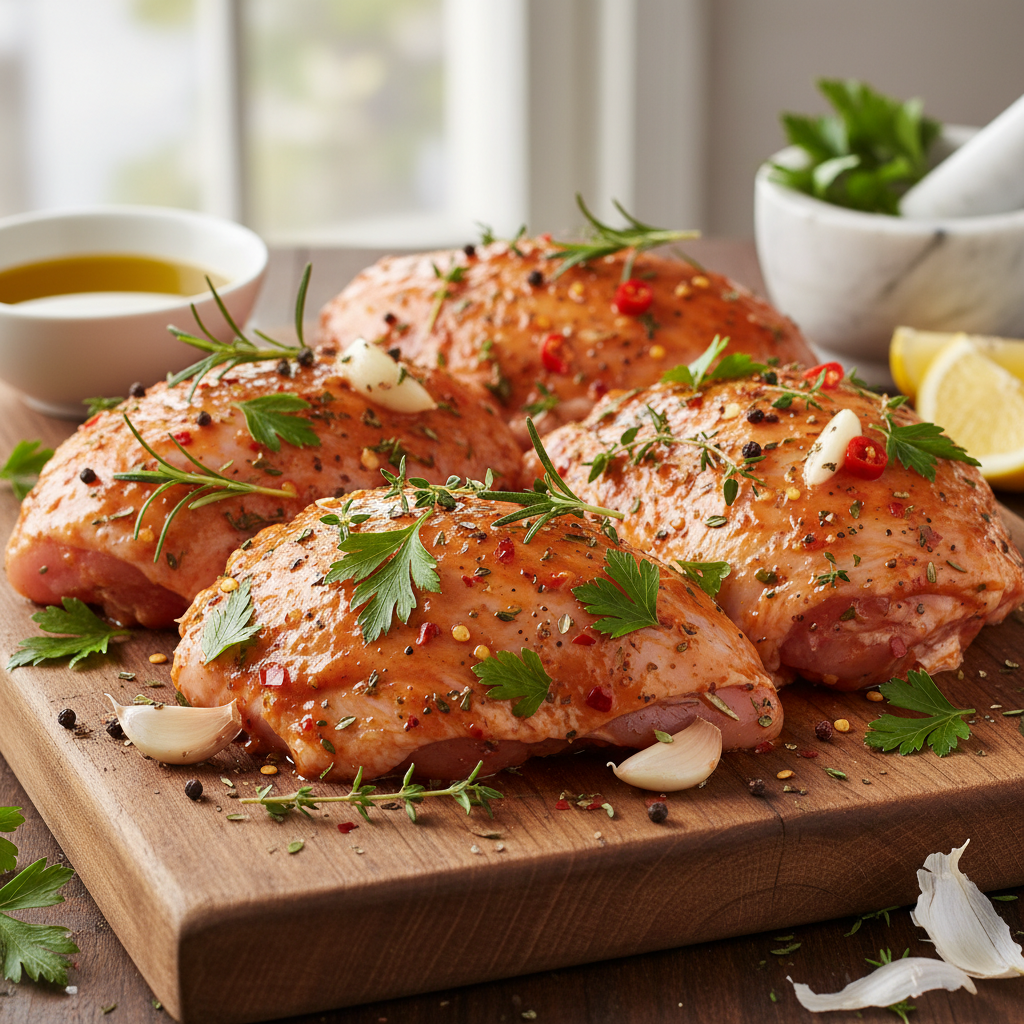
Why You’ll Love This
First up, a guaranteed favorite. Great chicken packed with garlic, herbs, and big flavor.
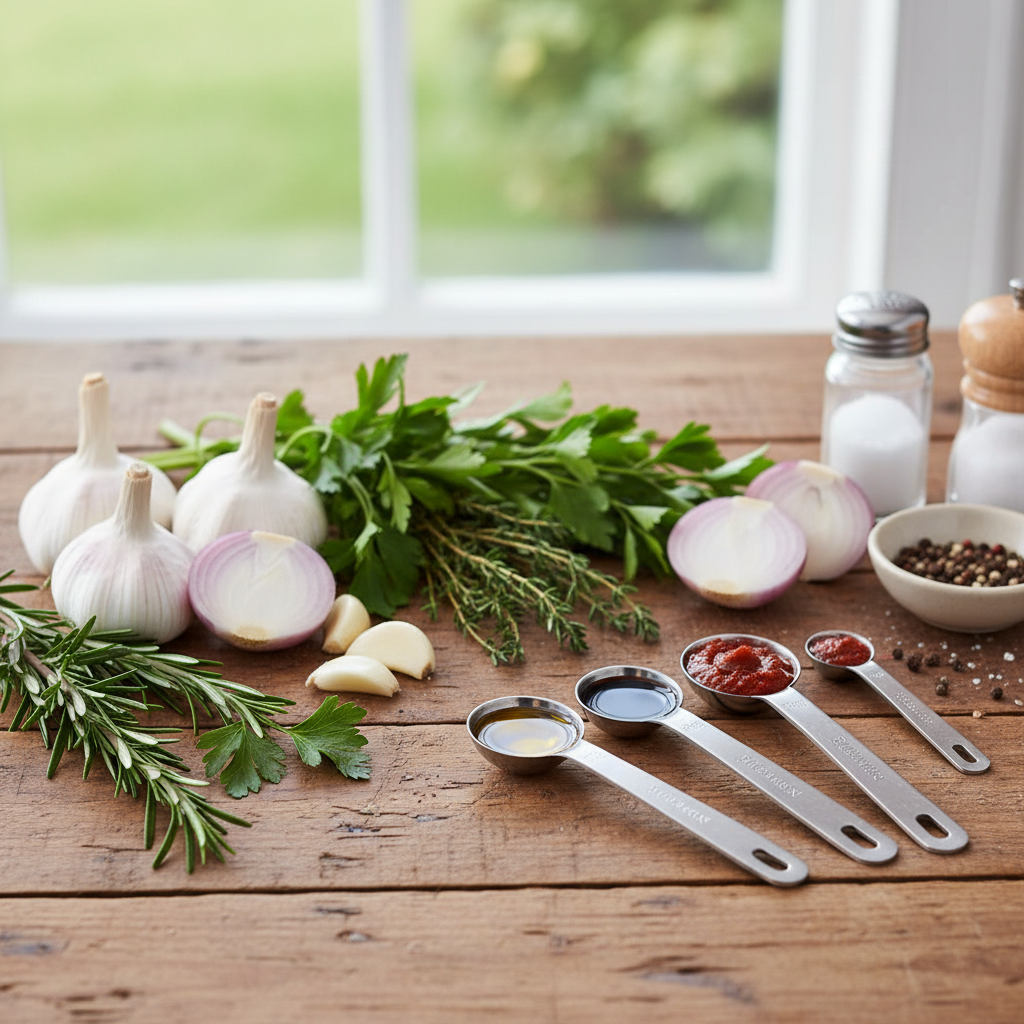
Ingredients
For the Garlic Herb Marinade
- eight cloves of garlic
- one peeled shallot
- zest of one lemon
- juice of one lemon along with one more lemon
- a half teaspoon of paprika
- one tablespoon of dry oregano
- about six sprigs of fresh thyme
- two teaspoons of coarse salt
- a half to three-quarter teaspoons of freshly ground pepper
- a half cup of olive oil or any neutral flavored oil
For the Barbecue Chicken Marinade
- a half peeled yellow onion
- five garlic cloves
- two tablespoons of sugar
- juice of one lemon
- two tablespoons of dijon mustard
- about two tablespoons of finely minced fresh thyme
- a third cup of soy sauce
- a third cup of white vinegar
- a half cup of dry white wine
- one and a half teaspoons of coarse salt
- about a half to three-quarter teaspoons of freshly ground pepper
- a half cup of neutral flavored oil
For the Chicken for Heat Marinade
- two teaspoons of oregano
- two teaspoons of chili powder
- a half teaspoon of ground coriander
- two teaspoons of ground cumin
- four garlic cloves
- a half peeled shallot
- zest of two lines
- juice of three total lines
- two tablespoons of honey
- two teaspoons of coarse salt
- about a half to three-quarter teaspoons of freshly ground pepper
- a half cup of olive or neutral flavored oil
For the Asian-Style Chicken Marinade
- two tablespoons of rice vinegar
- one tablespoon of shouting wine
- a quarter cup of soy sauce
- two tablespoons of oyster sauce
- three tablespoons of honey
- about a one to one and a half inch piece of peeled ginger
- four garlic cloves
- a half peeled shallot
- juice of one orange
- one teaspoon of coarse salt
- a half to three-quarter teaspoons of finely ground pepper
- a half cup of neutral-flavored oil
- sesame oil (optional, replace half of neutral oil)
- a few tablespoons of sriracha sauce (optional)
For the Balsamic Chicken Marinade
- two garlic cloves
- a half peeled shallot
- a half cup of balsamic vinegar
- three tablespoons of light brown sugar
- one teaspoon of dajan mustard
- about six to eight fresh basil leaves
- about one tablespoon of fresh rosemary
- two teaspoons of coarse salt
- about a half to three-quarter teaspoon of freshly ground pepper
- a half cup of olive or any neutral flavor oil
For the Italian Chicken Marinade
- Three basil leaves
- about six to eight timesforks that all have tender stems
- the leaves of one rosemary sprig
- two teaspoons of dry oregano
- for garlic cloves
- a half peeled shallot
- one lemon
- two tablespoons of red wine vinegar
- two teaspoons of coarse salt
- a half to three-quarter teaspoons of finely ground pepper
- a half cup of olive or again, neutral flavored oil
Instructions
- Start by finally grading in eight cloves of garlic.
- Then one peeled shallot.
- Add in the zest of one lemon.
- Juice this in along with one more lemon.
- Add in a half teaspoon of paprika, one tablespoon of dry oregano.
- Finely mince about six sprigs of fresh thyme.
- Add that right to the bowl.
- Add in two teaspoons of coarse salt and grind in about a half to three-quarter teaspoons of freshly ground pepper.
- Whisk in a half cup of olive oil or any neutral flavored oil.
- Give it a try.
- Add the chicken to the bag, pour on the marinade.
- You can either scrape in the rest of the marinade or add a bit of water, swish it around and pour it.
- Zip it air tight.
- Move everything around and get those flavors married up.
- Label it and date it.
- When it comes time to marinate, you can go in the fridge from as little as two hours and up to 24.
- You could also possibly push it up to 48 hours if you want.
- It will also freeze well for up to three months.
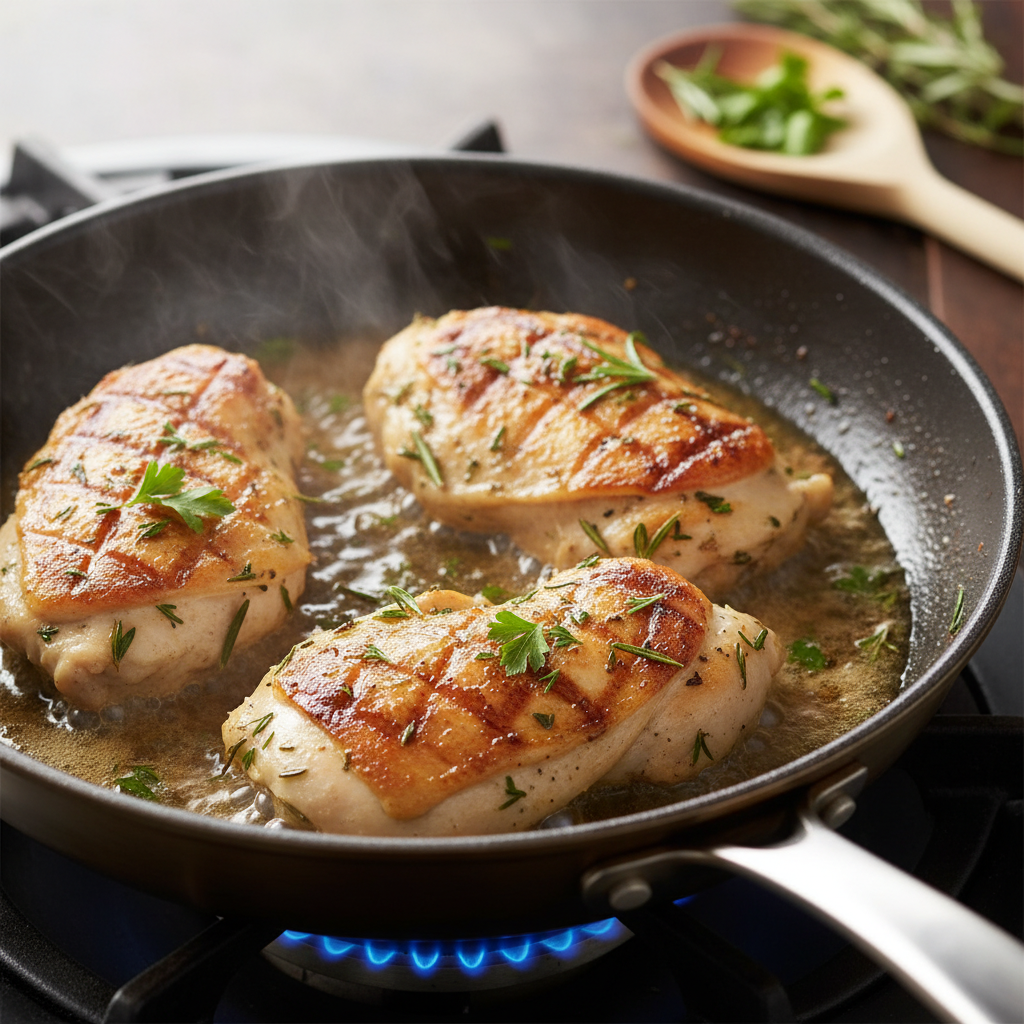
To Pan Sear the Chicken
- I usually use a nonstick skillet and add in just a bit of oil.
- Turn the heat up to medium-medium high-ish.
- Then place in the chicken.
- Cook it for five to six minutes per side.
- Flip it over and keep it moving.
To Grill the Chicken
- Use medium to medium-high heat, which is really about 325 to 350 degrees F.
- Cook for the same amount of time. Five to six minutes per side.
- On the first seared side, give it a 90 degree rotation halfway through.
- Finish it up on the grill until they’re cooked through.
Cooking Tips
Grading a shallot can be a little bit annoying, so just do the best you can and no problem if you can’t get all of it.
Acid, this is your tenderizer. It breaks down the connective tissues and the proteins and the meat. Not to mention gives it incredible flavors and better flavor absorption so that it can go down deeper and more quickly to the center of the protein, making it more delicious.
As long as the stems on the thyme are tender, I’ll mince those up as well since there’s so much flavor in them.
When using herbs and marinades fresh, generally offers a brighter more nuanced flavor than dry herbs, but dried herbs can be more concentrated and convenient of course.
Use fresh for quicker marinating, but for long marinade times, dry definitely needs all of that time to have more of an impact.
As a good rule of thumb, use a third of the amount of dry to fresh.
Remember, you’re not eating the marinade, you’re eating what it’s seasoning, so ensure it’s dang tasty.
When storing marinades that contain acid, they can react with metals and pottery glazes, so it’s best to marinate in glass bowls, resealable plastic bags or even a glass 13 by 9 casserole dish covered in plastic wrap.
I almost always use plastic bags and then I just wash them and reuse them.
This recipe will work for skin on, skinless, bone in, or boneless chicken breast thighs, drums, wings, you can choose, and you can marinate up to a total of three pounds of chicken for all of these marinades.
Add a bit of water, swish it around and pour it easier and clean.
Don’t forget to put on your chef hat at this point.
This is why I love marinating in bags, perfect for stacking and saving space.
Feel free to sub with a red, white, yellow, or sweet onion.
Using wine and marinades is an absolute game changer. And really, it’s because of the tannins, they help break down the protein much more quickly and effectively and delivers the rest of the ingredients way deeper inside of the meat and the bonuses in a fraction of the time. So use it.
Remember, soy is naturally salty, so we’ll be good there.
When I use olive oil and some of my other marinades, I want to make sure it isn’t competing with other flavors, especially things like soy sauce. They just don’t go well together, so neutral flavor oils are always the way to go.
Toast up whole seeds and spices were applicable. It’s quick, easy, it’s a one-to-one ratio, and makes everything more aromatic and in return more delicious. Once they’re toasted up, grind them down and you’re good to go.
Taste everything. That’s how you become a better cook.
If you happen to have a vacuum sealer, you can do that especially if you want to sous vide in all these flavors, but when doing so roasted garlic, garlic, comfy, or dry granules or powder needs to be used instead of fresh.
The temperatures don’t get high enough when sous videing to cook the raw garlic, which can raise the risk of botulism.
However, for marinades like this, where it’s being kept in the refrigerator the entire time, until it’s ready to unseal and cook is no problem.
If you want the marinade to penetrate a bit deeper into the chicken, consider using a pronger needle meat tenderizer.
Oil’s main purpose is to help distribute some of those fatty flavors and other ingredients to the meat. In addition, it will help keep it moist and create a protective layer so that won’t burn when it cooks.
In addition to whisking any of these marinades, you can also blend it.
When blending heads up, I’ll boy can get a little bit bitter because of the water-soluble polyphenols, which are bitter tasting compounds naturally present in the oil. They start to open up when blended, so if you’re going this route, swap it for a neutral flavor oil.
When using garlic and onion, which are from the allium family, use about half the amount because they can be harsh, bitter, and very overpowering.
In the end, it’s your calm whether you want it to be smooth or rustic.
It’s totally fine if you’re a little more, a little less, on either of these herbs. Don’t sweat it.
All of these little tips along the way like storing, labeling, using fresh first triurbs, onion substitutes, all the things can be applied to every single one of these marinades. It really is just about putting them into practice and before you know it, you’ll be making your own masterpiece.
To me, I prefer dry over fresh oregano in just about everything, but that’s just me.
Save a little clean marinade on the side for basting at the end of all these marinade.
Be sure to keep an eye on the heat no matter the marinade you don’t want things to burn. You want the chicken and marinade ingredients to brown up just like this.
Baked or broad or fine, but these are definitely better.
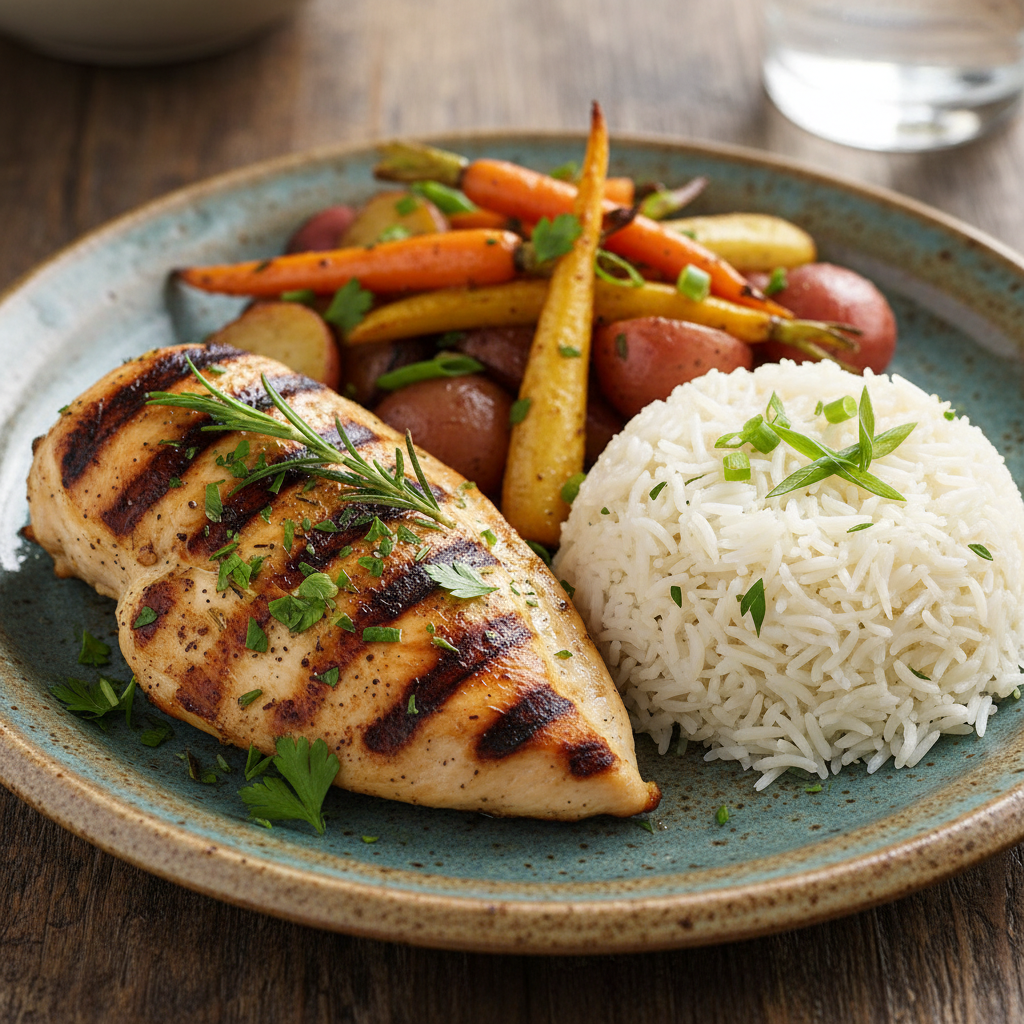
Serving Suggestions
This marinade goes great in the main marinade for Greek lemon chicken and potatoes dish, or chicken souvlaki or hey, just serve it over rice, delicious.
All the traditional sides like fruit, potato salads, coleslaw, all that goodness works extremely, well with this.
This one is specific and obviously meant to be served with peppers, onions, guacamole, tortillas, all things like that.
This is awesome served with rice and veggies, or can be used as the main marinade for any of your chicken stir-fried dishes. It’s incredibly versatile.
This is perfect to serve up over salads or as the main meat protein alongside any potato, rice, or veggie options.
I love serving this with vegetables on top of salads or with potatoes.
So good. All easy to make with simple everyday ingredients and they’ll completely level up your chicken.