

How to Perfectly Pan Fry Chicken Breast and Make Pan Sauce
What’s up dude, today I’m going to show you how to perfectly execute a pan fried chicken breast that is absolutely glistening with moisture. I’m also going to show you how to take that same pan with all those little brown bits on the bottom and make a pan sauce that will literally change your life and the way you think about food. Now let’s go!
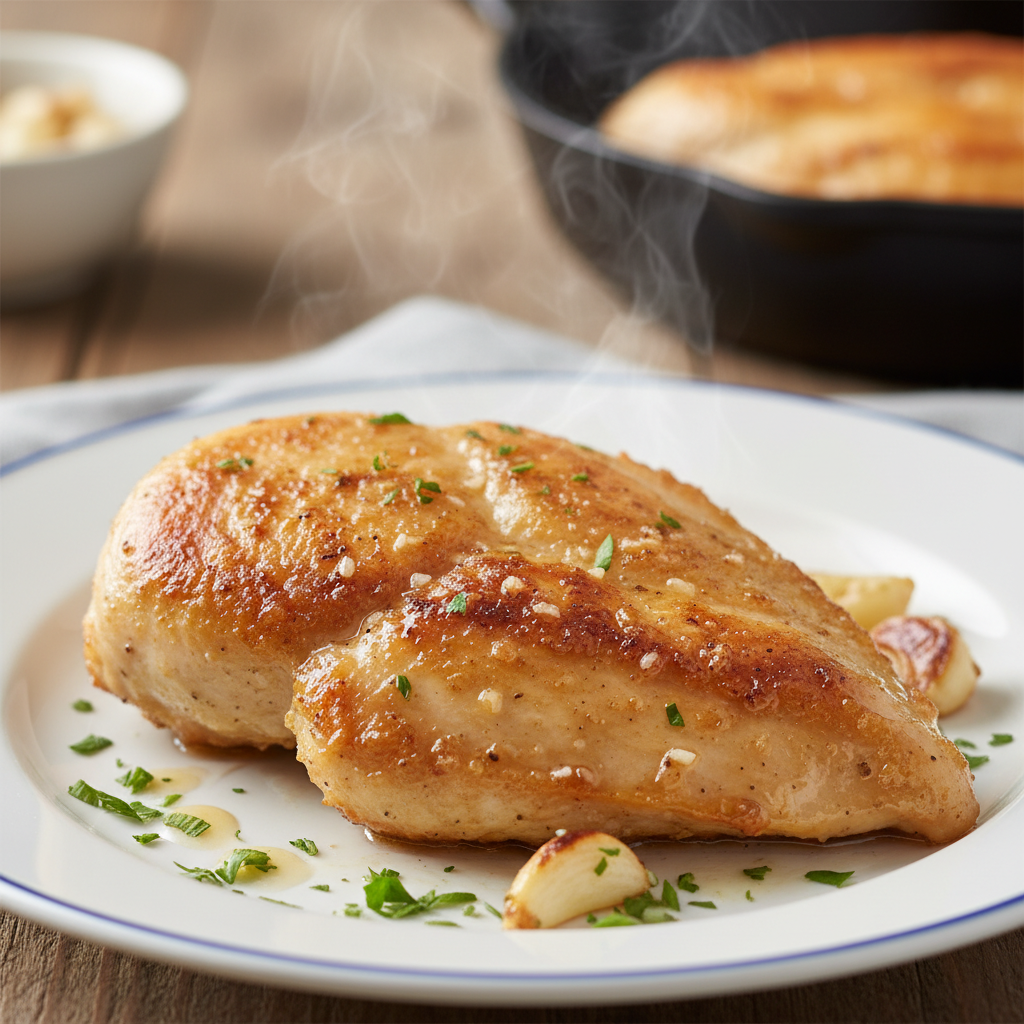
Why You’ll Love This
I’m also going to show you how to take that same pan with all those little brown bits on the bottom and make a pan sauce that will literally change your life and the way you think about food.
These sort of preparations just make me personally really happy.
And one of the best things that I’ve ever had, perfectly cooked chicken, perfectly flavored sauce.
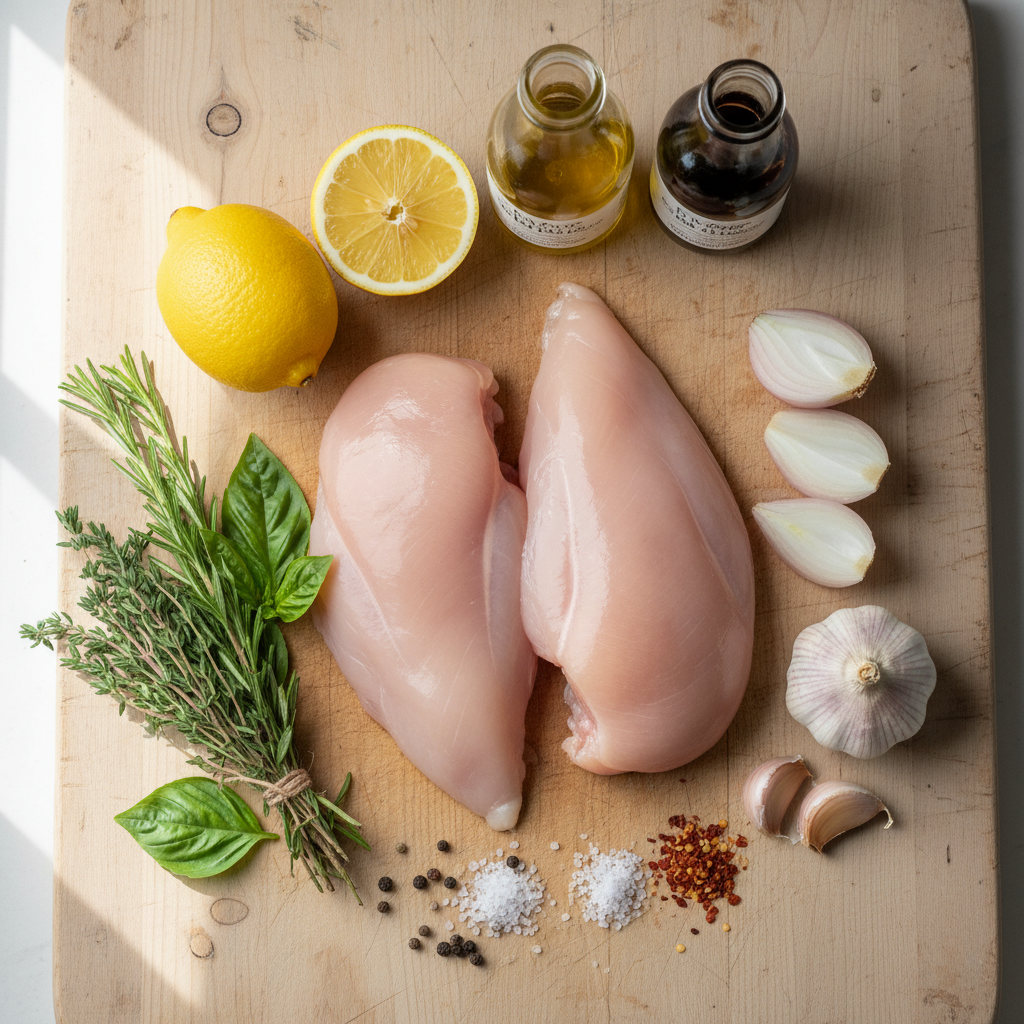
Ingredients
For the Pan Sauce (initial prep)
- shallot
- garlic
- lemon
- chives (or parsley, tarragon, or dill)
For the Chicken
- chicken breast (with the skin on here)
- olive oil
- rosemary salt
- kosher salt
- sprigs of stripped rosemary
- sage that’s picked off the stem
- A couple cloves of garlic
- fresh lemon zest
- black pepper
For Cooking
- neutral cooking oil (avocado oil, although you could use another one that’s fine)
- cold unsalted butter
For the Pan Sauce (cooking part)
- shallots
- garlic
- dry white wine (about a third of a cup)
- chicken stock (about a cup of it)
- cold unsalted butter
- lemon
- salt
- chives
Instructions
- Start by prepping the ingredients for the pan sauce coming up later on.
- Start with this shallot here, I’m going to go ahead and just half it, peel it.
- From here we’re going to make a little brunewas, which is just a fancy name essentially for a very small dice.
- Just do your best, slice it this way, and then we’ll slice it across here, which is very thinly, so we’ve got that nice fine dice.
- If you don’t feel confident enough with a knife to make those really small cuts, I’ll show you a way you can cheat a little bit.
- So I’m just slicing it across, which would be a julienne.
- Now turn this on the side, and I’ll make a few slices this way.
- You can always just do this if you’re not confident doing a brunewas, and you get basically the same effect right there.
- You can also cheat a little bit by just running your knife through it quickly after again.
- A little peeled garlic here.
- You could do the same with this if you want, but I actually like to get that shape of the garlic.
- So I’m just slicing straight across.
- When you get to the end, you’re just slicing off one finger basically.
- But by all means, if you just want to mince it up, you can do that as well.
- For the chives, I got a nice trick for you.
- I love this one, damp paper towel, and we’re just going to fold it a few times just like so.
- Turn it this way, take our chives here, and we’re just going to roll them up in here.
- I’m just going to keep them nice and compact, take off those tips there.
- And from here, we can just start slicing through.
- Lemon, just slice it in half.
- For the chicken breast, I have one with the skin on here.
- I’m going to start by just hitting it with a little bit of olive oil.
- As far as the seasoning goes, you can do what you like.
- I’m doing rosemary salt.
- It’s super easy to do.
- Just add kosher salt to a food processor.
- Then add a bunch of sprigs of stripped rosemary and sage that’s picked off the stem.
- A couple cloves of garlic and some fresh lemon zest and blend for about one minute, pulsing a few times along the way to get a good mix.
- And that’s it.
- Of course, we want to get that on both sides as well.
- So our Jean Gilbear is my little pepper grinder.
- That’s just black pepper.
- Black pepper.
- Of course, that’s going on both sides as well.
- I’ll just let that sit for a few minutes while we get the pan warmed up.
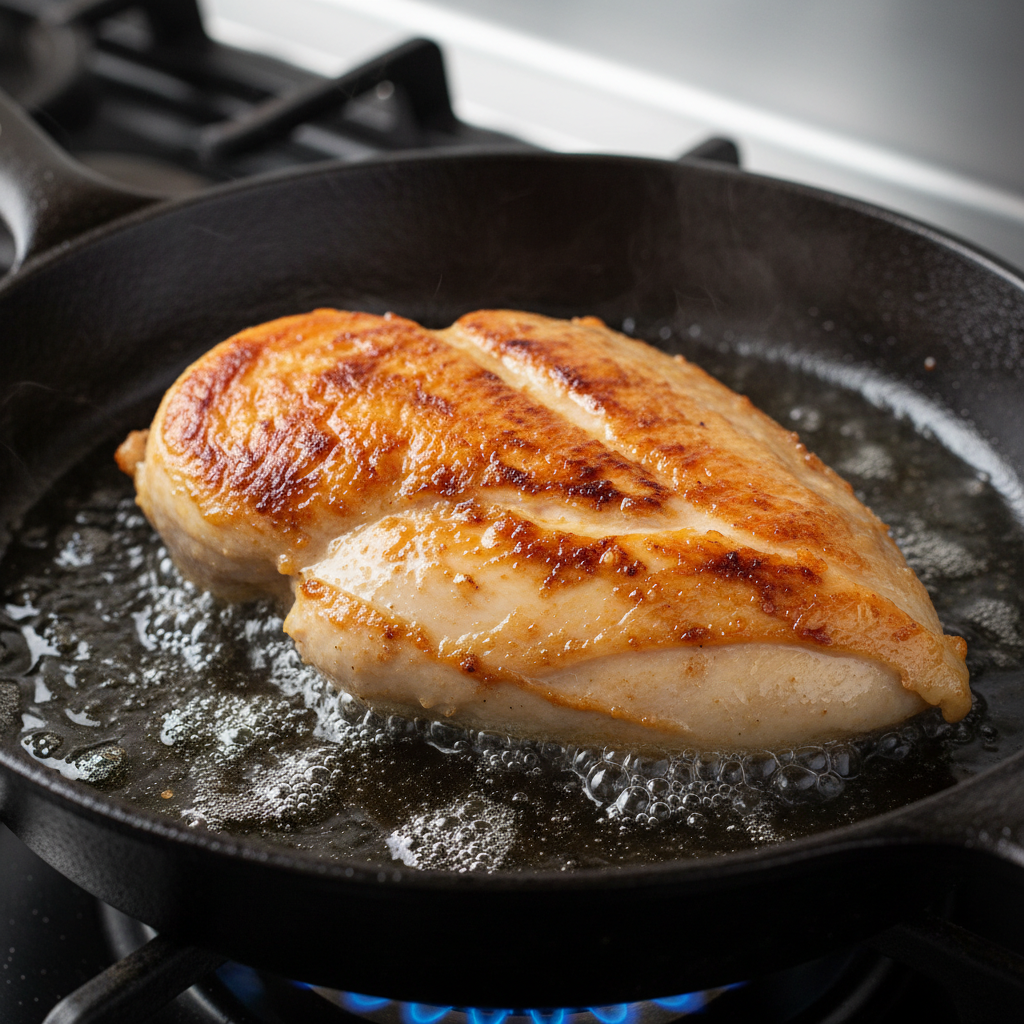
- Heat’s on medium high, I’m just adding a little bit of neutral cooking oil here.
- I’m going to lay in your chicken breast and always lay away from you in case you splash the oil.
- I always like to put a little bit of pressure on the chicken here for maybe 20 seconds or so just to make sure that skin has a nice flush good contact with the bottom of the pan.
- It’s just been about three minutes, and now I’m flipping it.
- Over three minutes, and that other side’s got a nice sear.
- I’m going to put it to the top of the pan, and then I’m going to drop the heat all the way down the low, and we’re going to add cold on salt and butter.
- Tilt the pan, so the butter doesn’t burn.
- And what we’re going to do now is base.
- Here you go.
- Obviously, if you want, you could add shallots, garlic, thyme.
- So just butter, just slow that flavor.
- I’ve been basing for about three or four minutes.
- Now, get it out to rest.
- Now, with the fat here, I’m just going to get that out.
- Time for the most fun and important part of this whole video making that pan sauce.
- Turn the heat on back to medium, medium, high.
- Start by adding those shallots, and they’ll already start picking up all that fond because there’s moisture in here.
- After about a minute, I’m just adding the garlic.
- The garlic’s been going for about a minute.
- You can skip the wine if you want.
- I’m doing some dry white wine, about a third of a cup.
- Now, we’re going to cook this down again until it’s almost gone.
- At this point, I’m adding in my chicken stock, about a cup of it.
- At this point, you want to turn that heat all the way down, low, low, low.
- And I’m going to start working in little cubes of cold, unsalted butter.
- A little more same deal.
- And then lastly, the lemon is a little.
- Tastes your sauce.
- Just test it for seasoning, and test it for the ratio of fat to acid, meaning butter to wine.
- I’m going to do a touch more butter.
- All little pinch of salt.
- And finally, chives.
- Once the chives go in, kill the heat.
- There’s your pan sauce done.
Cooking Tips
If you don’t want to do chives, you could use another green herb like parsley, tarragon, or even dill is actually a really good with chicken.
When you’re slicing any herbs, you just want to really sharp knife. It’s kind of the most important thing so they don’t bruise. You can get a nice end result.
On another note, you now throw that into a zip lock bag, and it’s going to stay fresh for so much longer, something about that little damp paper towel, the plastic bag creates a little sort of greenhouse effect, and they just seem to last forever, really.
You could do skin on skin off. That’s your personal preference.
I like going a little more finely ground with this pepper so that my chicken maintains a really good contact with the pan.
Whenever you’re cooking protein in a pan, you definitely want to heat up the pan for a few minutes. First, get that real nice radiant heat going and then you start cooking.
You can see how that oil kind of shimmers now, I can just tell it’s nice and hot.
You can even buy a little weight that do this. People use them a lot for fish, especially so it doesn’t curl up, but this is fine for now.
Let it cook, right? Don’t need to mess with it. Don’t need to flip it. Don’t flop it. Just let it do its thing.
When you’re starting to get that spidey sense that it might be time to flip, rather than flipping it looking at it, here’s what I always do anyway, is I get sort of almost eye level of the pan, and I just peek under it, and I can see how it’s doing.
I don’t want to turn it all the way around yet.
What I’m aiming for is to cook it about 30% of the way through from the skin side up.
If it spreads out too much right away, it can burn really quickly.
And you don’t want to start basing too early, waiting for a nice foam here.
Now the tricky part about basing is you have a lot of extra heat coming from all this hot foamy butter. And so what I’ve noticed happens, and I never see this talk about, it’s kind of misunderstood, is that you’re going to get a lot more carryover cooking.
When I’m cooking a steak, and I want it to be medium rare, a lot of times I’m pulling that 110 degrees or below, even sometimes 100 degrees. And it really depends on how aggressively I base.
So with the chicken, I’m not going to take this anywhere past 150. If you’re freaked out about that, you can take it further. But even pull this at 150, it’s going to carry over all the way up to 165.
On another note, chicken breast is shaped like this, right? It’s got a thin tail end and a fatter end. While you’re basing, if you can, just try to aim for the thick end. It’s almost like you’re concentrating your firepower and heat on that end, helping it to cook evenly. This is especially important if you have an airline chicken breast where that wing portion is still attached, because it sometimes is really hard to cook that joint.
As a general rule, you want to rest your protein half the time you cooked it. So if I had it in the pan for eight minutes, I want to rest it for four, although I like to go a little bit above that and do a minute more, so five. So if I cooked it for 10, I would do six. If I cooked it for eight, I would do five and so on.
Of course, most important thing right now is don’t throw away this pan. There’s a lot of flavor in there, and that’s what we’re going to use to build the pan sauce.
This leftover chicken butter you can save. It’s got a lot of nice flavor.
Since shallots are so small, they’re going to cook really fast. So just watch them and stir them frequently.
You could just use more lemon juice.
If you’re making a pan sauce for a steak. We wanted to make a pan sauce for a steak. Instead of white wine, we do red wine. Instead of chicken stock, we do beef stock. And the rest stays the same in there.
It’s homemade, but you can use whatever I don’t care.
You have all that acid coming from the wine, so you need the butter to cut through it to balance out the sauce.
And you want to work in a little at a time, and it’s going to emulsify and thicken the sauce. And you don’t want to add any more butter until those first little cubes are worked in.
This is even a tiny bit thick for my liking, but I think most people will actually probably prefer it this way. If you want to thin it out, you could just add a little more chicken stock.
Serving Suggestions
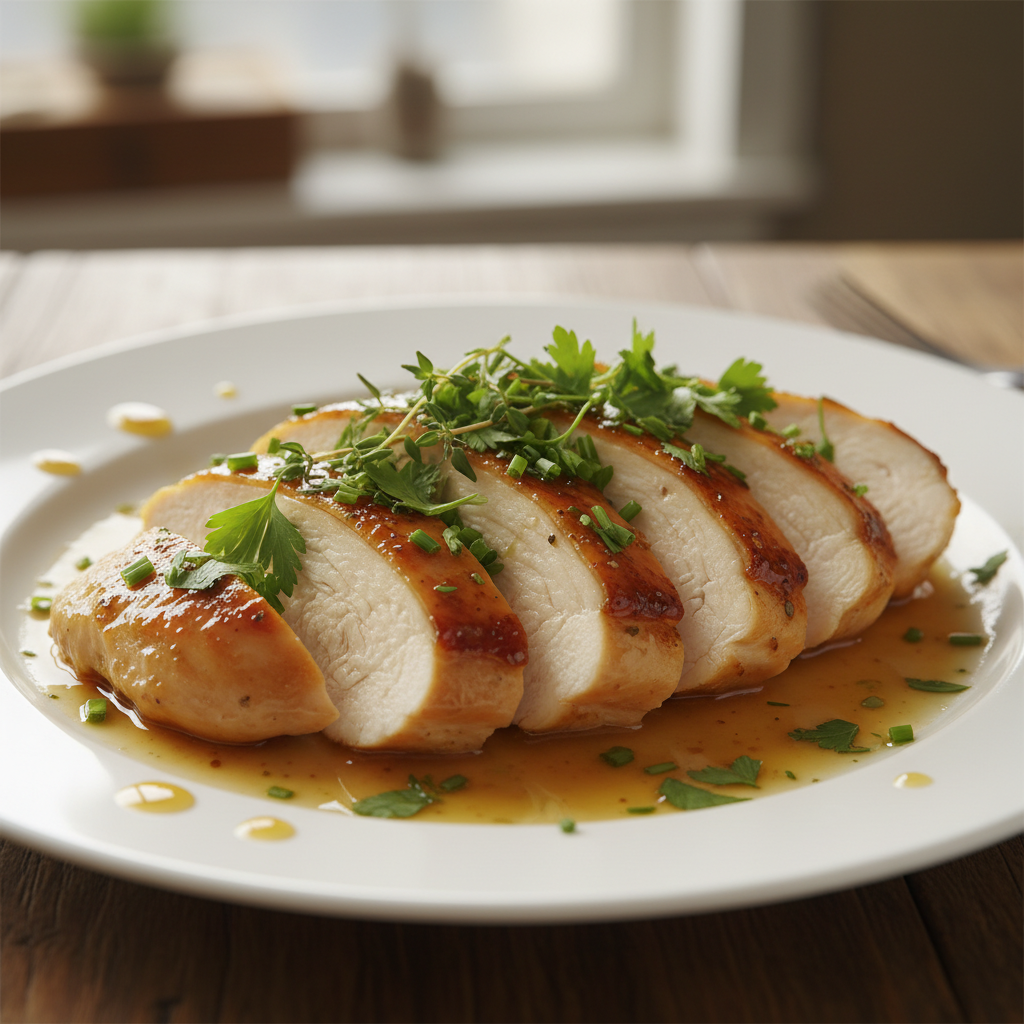
When it comes time to serve, you can obviously just slice the chicken like that if you want.
If you like that, look, it’s fine.
I will say, though, the grains on the chicken are running like that, so if you want to go by chef rules, you actually should slice it across, which you will see done in some high-end kind of restaurants.
So that’s what I’m going to do.
You should get a more tender bite that way.
All right, let’s slice the rest, and then let’s take it to the plate and hit it with the sauce.
I would legit eat three entire chicken breasts, just like this.
There’s nothing else to say.
We’re gonna eat finishes in the next two seconds.
Make, make it.